Big Walk のパズルは明快なループで動きます。世界の色付きモニュメントでパズルを解いて赤い豆とヒョウタンを集め、タワーに預けて鍵を得て、その鍵で列車やチェアリフトなどの新エリアをアンロックするという流れです。クエストログもマーカーシステムもなく、オープンな島を探索し、鮮やかな建造物を目で見つけてパズルを発見します。ここでは、Big Walk のパズルシステムの仕組み、使う道具、レビュアーが記録した主要なパズルエリアを完全解説します。
基本のパズルループ
Big Walk のすべてのパズルは、ひとつの進行システムにつながっています。パズルをクリアすると、収集品 — 人によって赤い豆、赤いヒョウタン、「タマゴみたいなやつ」とさまざまに呼ばれるものが報酬として手に入ります。ゲームは決して名前を教えてくれないので、どのグループも自分たちの言葉を発明します。グループ固有の内輪ボキャブラリーの一部になるのです。それを島のあちこちにあるタワーへ運び、タワーの端末に預けると鍵がもらえます。
鍵には小さな儀式があります。タワーの入口の機械が鍵を削り出し、矢印が次のスロットへ導き、アンロックが完了します。その鍵が列車やチェアリフトなどの新しい地域と移動手段を開く — 島全体がパズルの進行でゲートされており、収集品がそれを開く通貨です。
山頂には赤、青、緑、黄の4つの色付きタワーがあり、GameSpot のアドバイスは、まず赤いタワーから、一度に1つのタワーに集中することです。ゲームはあなたをその近くに配置して促します。各タワーには決まった数の収集品が必要で(赤は5つ)、その報酬が残りのゲームを楽にします。それ以降の順番はグループ次第です。
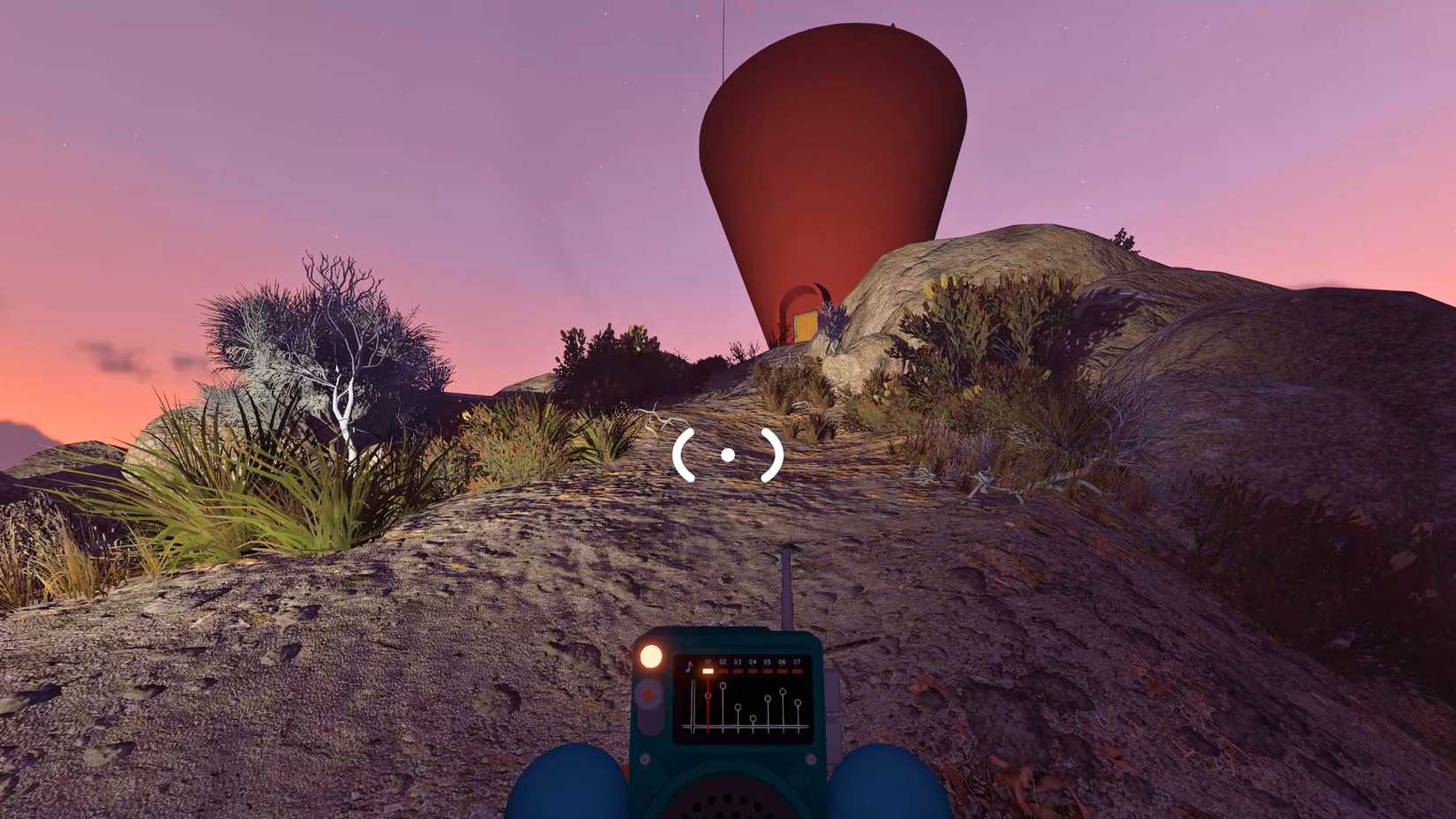
つまり、埋め草や無駄な作業はありません。解いたパズルはすべて、世界へのアクセスを確実に前進させます。レビュアーはこのループを緊密で満足度が高いと評し、グループを引きずり込む「あと1つだけ」感覚が常にあると述べています。
パズルは色付きモニュメントの中にある
Big Walk のパズルは、ランドマークとして機能する特徴的な鮮やかに彩色された建造物の中にあります。レビュアーが記録したパズルのモニュメントの例です。
- 緑のホラー風の家 — 不気味で緑色の建造物で、ひとまとまりのパズルを収容しています。
- オレンジの円形闘技場 — 大きなオレンジのアリーナ風モニュメント。
- 青のサウンドステージ — 音をテーマにした青い建造物。
- そびえる青の螺旋、巨大なジャングルジムなどのおもちゃ風モニュメント — Kotaku は一式を、風景に点在する巨大な Fischer-Price のおもちゃに例えています。
各モニュメントは遠くからでも視認でき、マップマーカーのない世界でのナビゲーションに役立ちます。地平線に色が見えたことが、次のパズルを見つけるきっかけになることが多いのです。
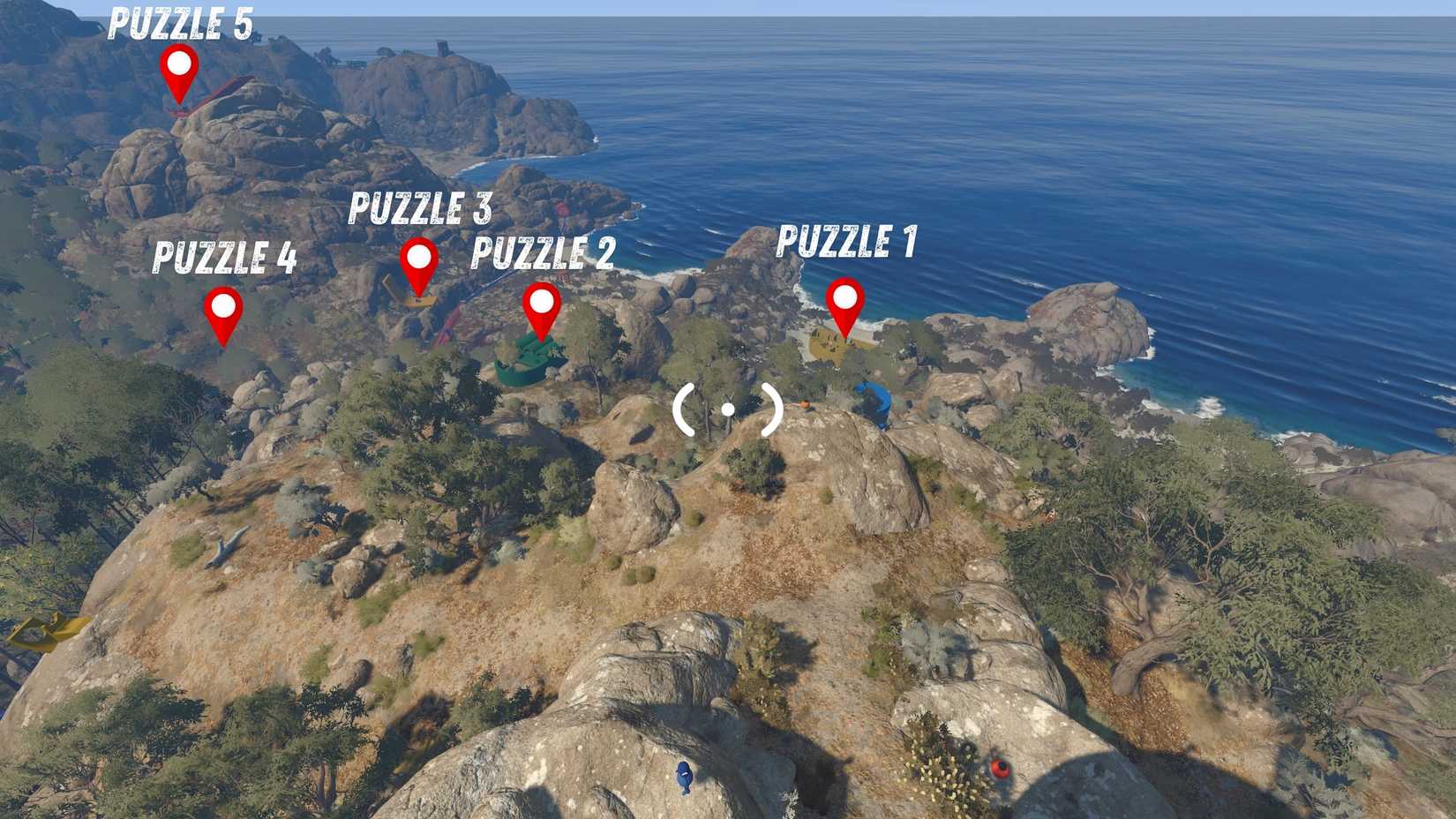
ひとつのタワーのパズルチェーン全体の具体例は、赤いタワー攻略がスクリーンショット付きで全5パズルを解説しています。島のランドマークがどうナビゲーションシステムとして機能するかは、Big Walk マップガイドで説明しています。
記録されているパズルの種類
GameSpot は島全体で数十個のパズルがあると述べており、レビュアーは幅広いバリエーションを記録しています。報道からの例です。
- バスケットボール — オーブをフープに何度も投げ入れる。
- 伝言ゲーム — 情報の一部しか持たないプレイヤー同士で、形やボタンの並びを伝言していく。
- 目隠しコース — 1人が目隠し(実際は視界を遮る巨大な黄金の頭)をして障害物コースを進み、他のメンバーが指示を叫ぶ。
- 防音室 — 防音空間の中にいる1人が音楽のジングルを伝え、外の残りのメンバーがステレオと一致させる。
- 同期ボタン押し — グループが離れたプラットフォームに分かれ、同時押しのタイミングを合わせる。
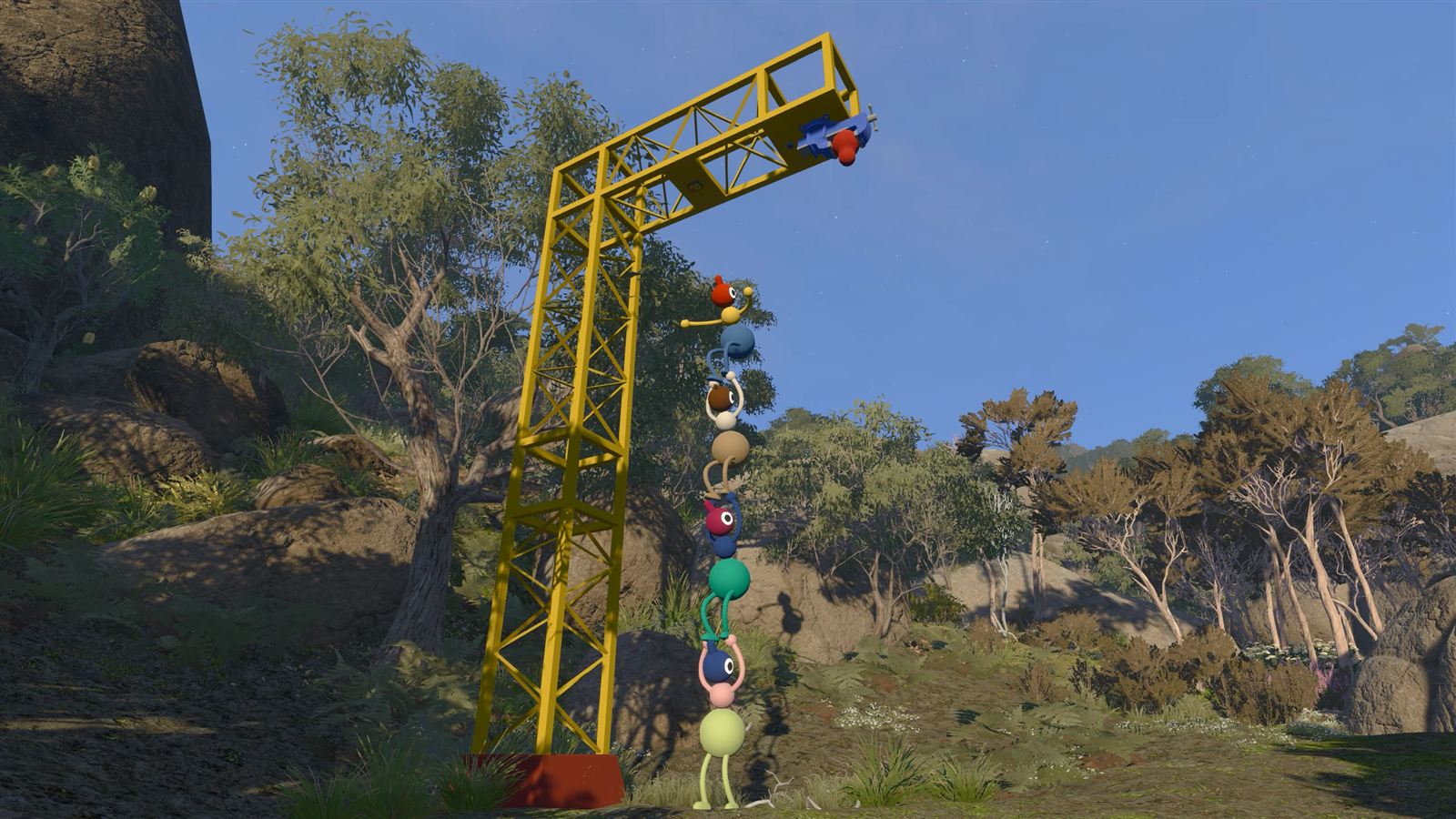
- 人間スタッキング — チュートリアルでは、クレーンの上のボタンに届くようプレイヤーが物理的に積み重なる。
- 数字コードパズル — GameSpot のヒントは、グループを長時間悩ませるパズルとしてコミュニティで知られる「4166, 1899」に言及しています。完全な解答は4166 1899パズル攻略へ。
パズルは固定の難易度カーブでだんだん難しくなるわけではなく、ほぼ任意の順序で挑戦できるためです。難しいものもありますが、残酷なほどではなく、ゲームは常に必要な道具をくれます。パズルを解くたびにパーティーホーンの音と紙吹雪が舞い、レビュアーが「本気で勇み立つ」と評したミニ祝祭が始まります。
コミュニケーションこそ本当のパズル
Big Walk のパズルを定義する特徴は、コミュニケーションの制約を中心に設計されていることです。多くのパズルはグループを引き裂き、視線を奪い、防音壁を挟み、プレイヤーごとに異なる情報を与えたうえで、近接ボイスチャットで話し合って解くことを強制します。自分には見えるが仲間には見えないものを説明したり、自分にしか聞こえない音を伝えたりするわけです。
レビュアーは一貫して、こここそ Big Walk の輝きどころだと言います。パズルは伝統的な意味では難しくありませんが、連携するのが難しい。説明しがたいものを友達に説明する摩擦こそが、挑戦と笑いの源泉です。Kotaku のレビューは、このゲームはグループを集団的天才にさせてくれると論じています。
道具とガジェット
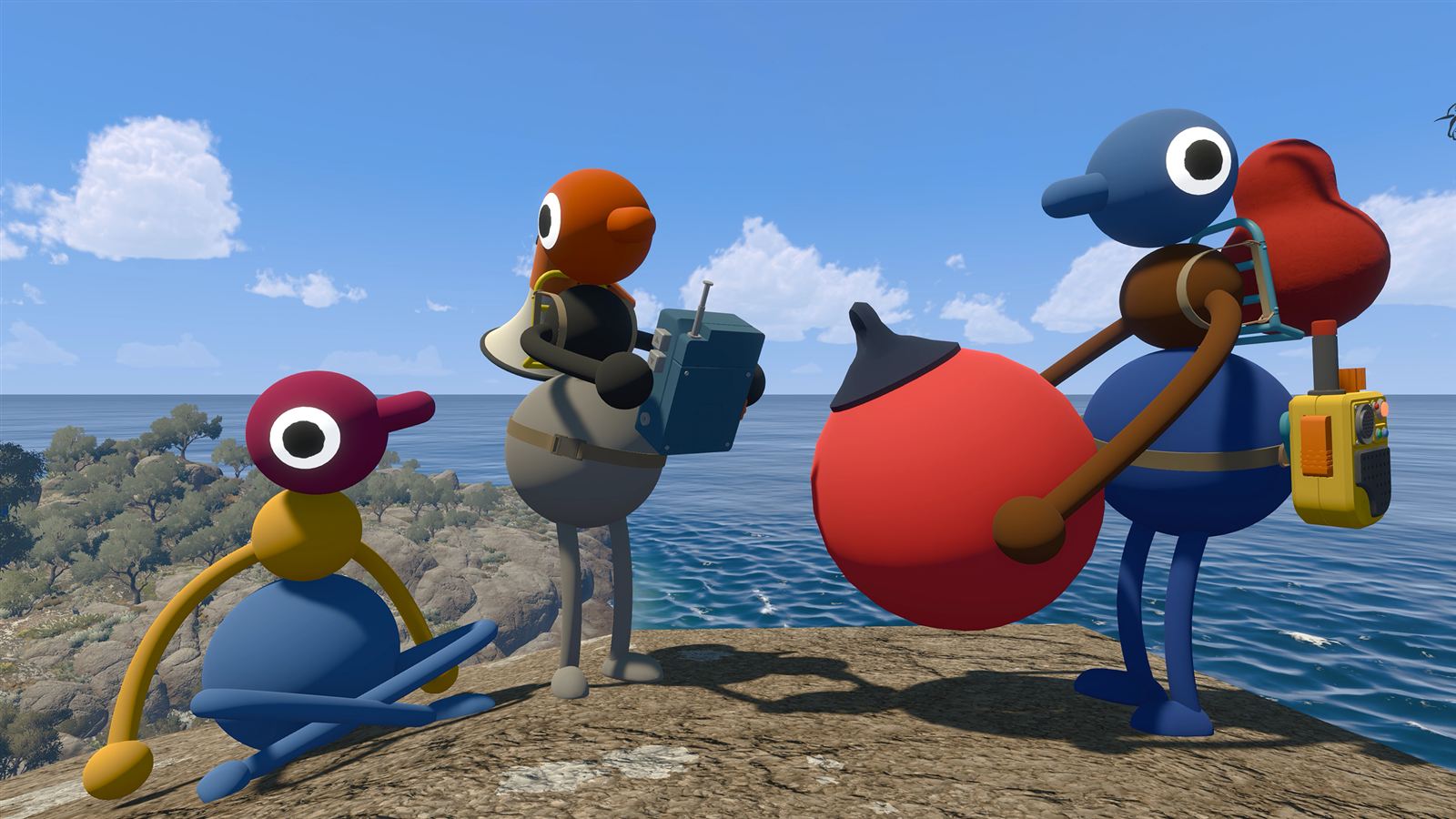
キャンペーンを通じて、Big Walk はグループに特定のパズルを可能にする専用の道具を与えます。公式の機能リストには以下が含まれます。
- トランシーバー — 近接チャットが届かない距離で連絡を取るため。それ自体ザザザとした音で届きます。
- レーザーポインター — 世界の中のものを仲間に指し示したり、同期押しのカウントダウンをしたりするため。
- 双眼鏡と望遠鏡 — 遠くから看板を読んだりランドマークを探したりするため。
- メガホン、信号弾、ホワイトボード、カウベル — 叫ぶ、合図を送る、書き置きを残す、音を出すため。
- 巨大な黄金の頭 — 障害物コース系パズル用の「目隠し」。
両手で持てるアイテムは一度に1つだけで、道具には希少なものもあります。IGN のグループは、トランシーバーよりパズルの方が多かったことがよくありました。島の青い建造物には、アイテムを1つずつ追加でしまえるバックパックとベルトがあり、フル装備のプレイヤーは最大3つまで所持できます。装着には友達の手助けが必要で、手に持ったアイテムは落とせますが、しまったアイテムは落とせません。各ガジェットの入手場所は、専用の道具・アイテムガイドで解説しています。
これらの道具はやり込み的なパワーアップではなく、新しい種類の協力問題を解き放つコミュニケーション楽器です。
落とし物預かりテーブル
知っておくと便利な実用的な機能がひとつ。Big Walk には、毎回のセッションが始まるジムエリアに落とし物預かりテーブルがあります。前回のセッション終了時にグループが持っていたアイテム — バックパック、ベルト、そして中身も — がそこに並びます。次のセッション開始時に懐中電灯を使えるようにしたければ、ホストがその夜を終える時に誰かが持っているようにしましょう。
モノを絶えず取り落とし、グループからはぐれがちなこのゲームで、このテーブルは大切なものを永久に失わないために存在します。終了時に誰も持っていなかったアイテムがどうなるかは確認待ちです。残したいものは誰かに持たせるのが安全な習慣です。
パズルは全部で何個?
パズルの正確な総数は確認待ちです。GameSpot は「数十個のパズル」と述べており、レビュアーは約20時間のキャンペーンで多数のモニュメントを記録していますが、公式の「パズルX個」という数字は発表されていません。エンディングまで到達するにはほぼすべてをクリアする必要があり、さらに終了後の追加コンテンツもあります。埋め草なしの、最初から最後までのコープキャンペーンを満たすのに十分な、大きくとも有限のセットを期待してください。
FAQ
Big Walk のパズルは何個ありますか?
数十個 — GameSpot のカウントによる。公式の総数は発表されていません。エンディングに到達するにはほぼすべてをクリアする必要があり、終了後コンテンツもさらにあります。
Big Walk の赤い豆の収集品は何ですか?
パズルが落とす名前のない報酬です。プレイヤーは赤い豆、赤いヒョウタン、「タマゴみたいなやつ」と呼んでいます。タワーの端末に預けると鍵がもらえます。
最初にどのタワーをやるべき?
赤いタワーです。ほぼ全員のアドバイスが一致します。スタート地点に最も近く、5つのパズルは序盤の難易度で、報酬(地図とコンパス)がその後のすべてを楽にしてくれます。全工程は赤いタワー攻略で解説しています。
Big Walk をクリアするのに全パズルを解く必要がありますか?
ほぼそうです。エンディングに到達するには収集品がほぼすべて必要で、さらにゲームクリア後コンテンツがあります。赤(5つ)以降の各タワーに必要な正確な数は確認待ちです。
Big Walk で一番難しいパズルは?
報道とコミュニティの報告が繰り返し挙げるのは4166 1899の数字パズルです。机制的に難しいのではなく、グループが地図かGPSを手に入れるまで解けないためです。完全解答を参照してください。
パズルはどんな順番でも解けますか?
ほぼそうです。固定の難易度カーブはなく、タワーはほぼ任意の順序で挑戦できます。例外は、4166 1899のように後半の道具の所持を暗に前提とするパズルです。
まとめ
Big Walk のパズルは緊密なループで回ります。色付きモニュメントでパズルを解く → 赤い豆とヒョウタンを集める → タワーに預ける → 鍵を得る → 列車やチェアリフトなどの新エリアをアンロック。埋めるべき色付きタワーは4つ(赤、青、緑、黄)。本当の難関はコミュニケーションで、多くのパズルがグループを引き裂き、各自が知覚できること・できないことを話し合うことを強制します。トランシーバー、レーザーポインター、双眼鏡、信号弾、黄金の頭の目隠しなどの道具が特定のパズルを可能にし、落とし物預かりテーブルがセッション間でアイテムを守ります。パズルの正確な総数は確認待ちです。
出典
- GameSpot — Big Walk tips(パズルループ、タワーの順番、数十個という数、パズルの種類の例)
- GameRant — Big Walk Red Tower Solution & Map Location by Ayyoun Ali, 2026年8月4日(上記のタワーとパズルマップのスクリーンショットはこの記事からのものです。出典明記のうえ使用)
- PC Gamer — Big Walk: So, what's the deal with that number puzzle? by Christopher Livingston, 2026年8月8日(4166 1899パズルの文脈)
- Kotaku および IGN のレビュー — パズルの多様性、コミュニケーション設計、落とし物預かりテーブル(本文中に引用)
関連するBIG WALKトピック
関連ページで全体像を把握: