SIGNAL · LIVE//CO OP · OUT NOW//FAN-MADE GUIDEENJADEES
BIG WALK WIKI
TOPICSGUIDE
BACK TO TOPICS
MUL-01 · MULTIPLAYER

Max Players

Big Walk supports 2-12 players online. Two is focused co-op; twelve is "an absolute mess" per House House.

CO OP2-12PARTY SIZE

Big Walk supports 2 to 12 players in a single co-op session. House House puts it plainly in the official features: "Big Walk can be played with as few as 2 players (i.e. a focused co-op experience) or as many as 12 (i.e. an absolute mess)." When the host starts a session, they pick a group-size mode — 2, 3, or 4+ — and the game slightly adjusts the puzzles so they stay solvable for that headcount. You cannot play with fewer than two, because the game is co-op only.

The 2-12 Player Range Explained

Big Walk's flexible player count runs from a minimum of 2 to a maximum of 12. The developer's own framing is that 2 players is a tight, focused co-op experience, while 12 players is chaotic in the best way. This is not a game where more is always better — a smaller group solves puzzles with more precision, while a large group generates more of the emergent comedy Big Walk is loved for.

The range is a deliberate design choice, not a technical leftover. Because every puzzle in Big Walk requires more than one person to solve, the floor has to be two. And because the game is about a group of friends sharing one walk, the ceiling is set where the party stops being a walk and starts being, in House House's words, "an absolute mess." Somewhere between those poles is the session your group will remember.

The same campaign works across the whole range. One reviewer's core group of three played roughly twenty hours across several sessions, with extra friends jumping in here and there — so you do not need a fixed dozen to commit.

Group-Size Modes: Two, Three, Or Four-Plus

The key mechanic is the group-size mode chosen at session start. The host selects 2, 3, or 4+, and the puzzles tune themselves: a challenge that expects several simultaneous players will not stall a two-person group, because the mode adjusts it. This lets the same game work for a date-night duo and a chaotic party of eight.

The mode choice is not permanent. Switching between the sizes between sessions does no harm to the save file, so a group that usually runs four can drop to the 2 mode when half the crew is away. Reviewers highlight this as the solution to real-life scheduling: the ability to adjust is great when one of your friends cannot make a session.

The flow lives entirely with the host. After choosing to host a game, the host names a save file (editable any time), and the next screen asks how many people are playing: two, three, or more than four. That single question is the whole headcount decision — nobody else has to configure anything, and joiners simply arrive.

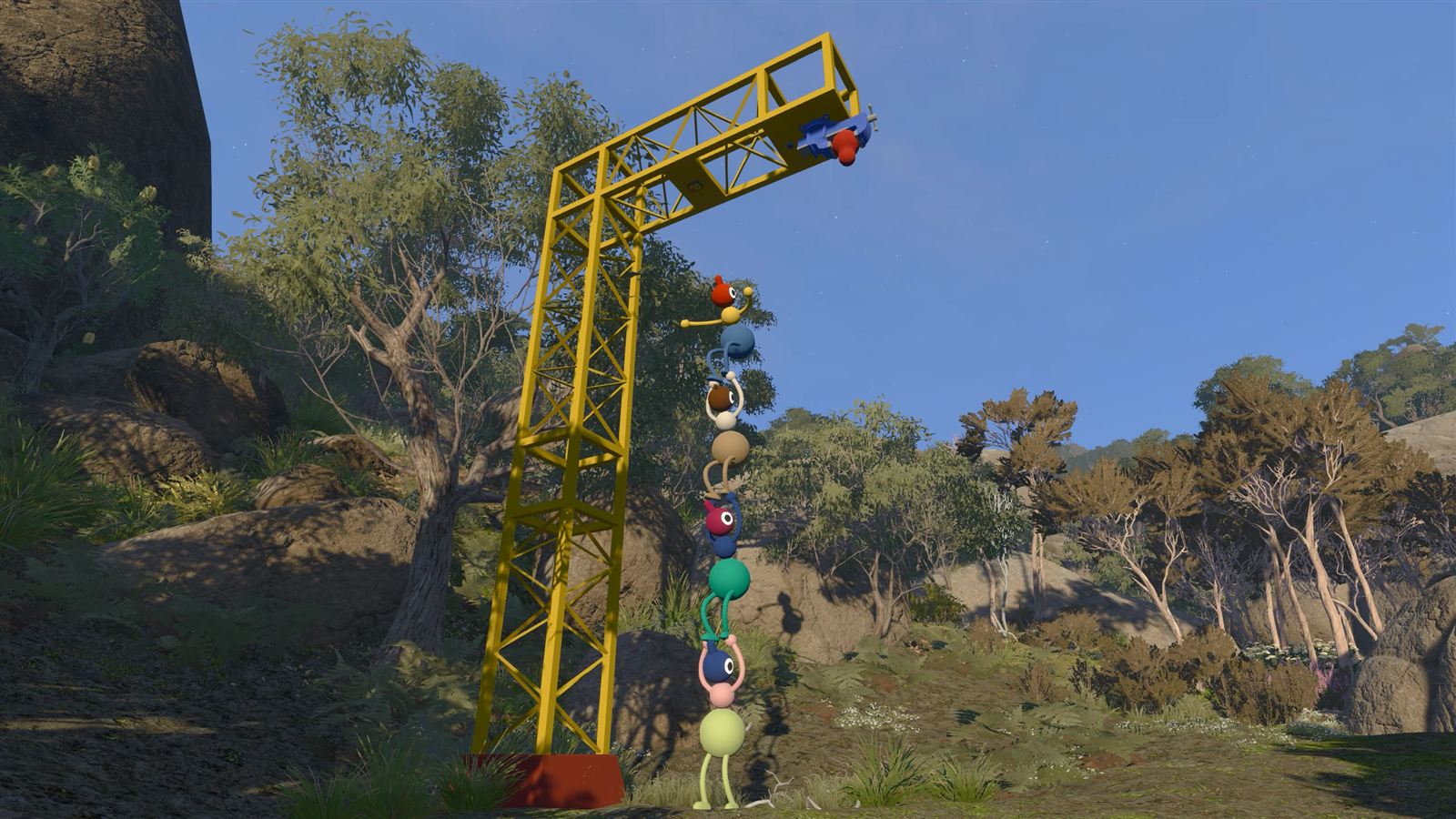
What the adjustment does not do is flatten the experience. In a larger group, some puzzles play out as literal human infrastructure — one reviewer's group of six had to physically stack on top of one another to reach a button atop a giant crane. The mode keeps every headcount solvable; it does not keep every headcount identical.

What Each End Of The Range Feels Like

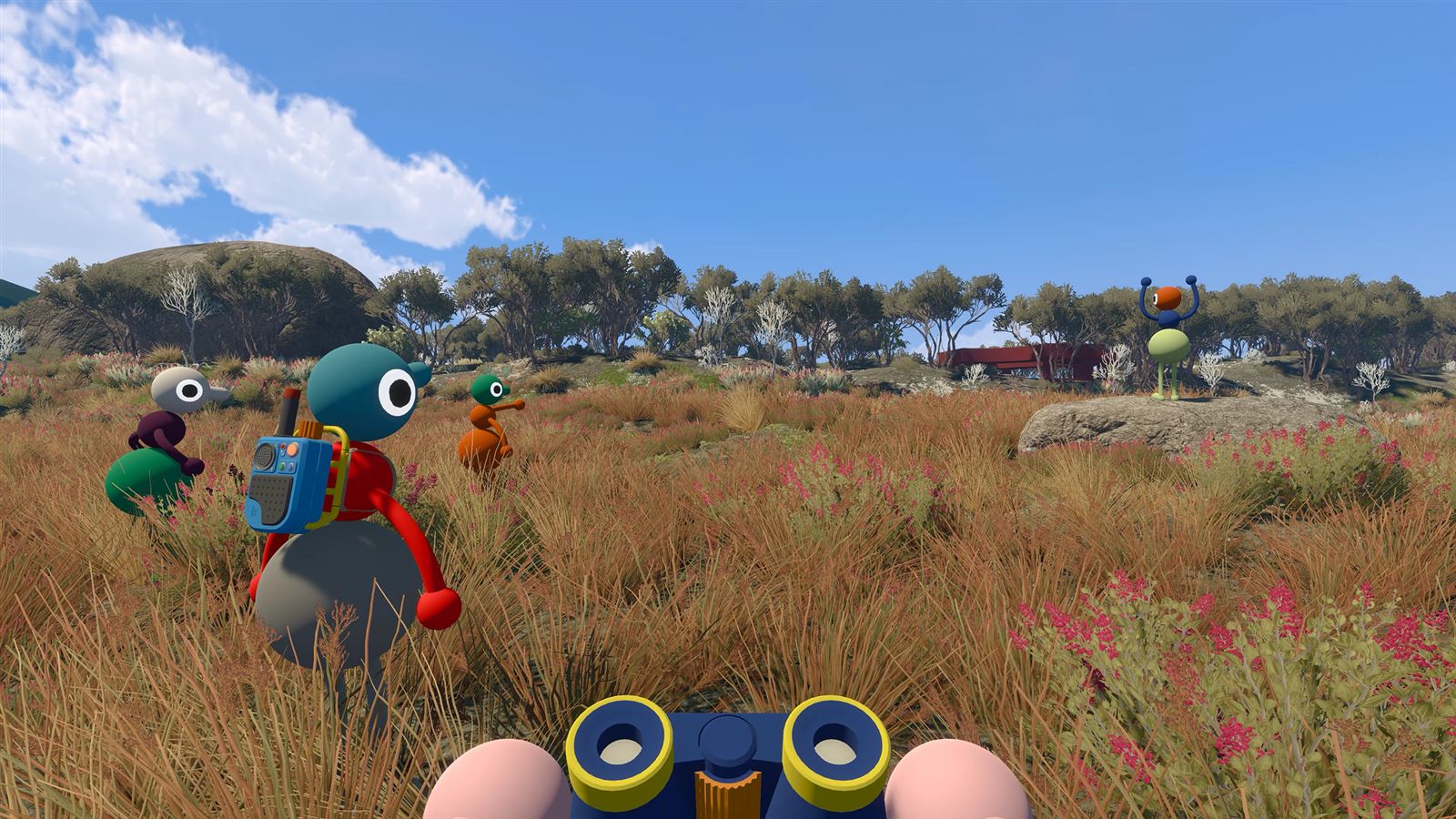
At 2 players, Big Walk is the focused co-op experience the feature list promises. Two people can coordinate tightly, hold a conversation the whole way, and solve with precision — but some of the party-game energy and divided-attention chaos is gone. At 12 players, the game becomes a parade: more hands for multi-step puzzles, more voices on the walkie-talkies, and far more opportunities for someone to wander off, get lost, or kick the flare gun into the trees.

Neither end is wrong. Couples and pairs get a quieter, more intimate puzzle campaign; big friend groups get the full comedy engine. The range exists so the game fits the group you actually have.

You Need At Least One Friend

Big Walk is co-op only — there is no single-player mode. You cannot boot it up and play alone; the game requires at least one other person online. This is a deliberate design decision by House House, and it shapes everything: the puzzles are communication puzzles, and communication requires at least two people.

If you are hoping to play solo, Big Walk is not the game for it. The whole design assumes a group. Line up at least one co-op partner before you buy.

What Group Size Should You Pick?

Reviews consistently suggest that bigger is richer — Kotaku recommends "at least five or six if you want the richest experience possible." A core group of around four to six gives you enough people to split up, share tools (walkie-talkies, laser pointers, flashlights), and generate the memorable chaotic moments reviewers rave about — without the unmanageable chaos of a full dozen.

Two players works and is fully supported, but you lose some of the party-game energy. Three is a solid middle ground — one reviewer's core trio had a delightful twenty-hour campaign. The 4+ mode unlocks the richest experience for most groups, according to critic impressions.

One caution from reviewers: while people can hop in and out of a session, a rotating cast is not ideal, because Big Walk builds on itself — the knowledge your group gains in one session carries into the next. A consistent roster beats a full one.

Crossplay Helps Fill A Lobby

Because Big Walk supports crossplay, you are not limited to friends who own the same platform. A PS5 player, a PC player, and a Switch 2 player can all fill out your 2-12 roster. This makes hitting your preferred group size easier — you draw from your whole friend pool across PC, Mac, PS5, and Switch 2, rather than just one console's friend list.

PS5 players could also claim the game free at launch via PS Plus, which helped convince the budget-conscious members of a group to hop in. Whether that offer is still running is to be confirmed on the PS Store.

Save File And Host Considerations

The session host owns the save file, and your campaign is tied to that host. If your group is large and plays across many sessions, pick a host who can reliably be online when the group wants to play — because if the host is absent, the others cannot continue that specific save. This is a known friction point reviewers flagged: the host's absence blocks the group from progressing the shared save.

For a big group, agree on the host upfront and set a regular play night. Big Walk is designed as a start-to-finish co-op campaign, so consistency matters more than headcount.

Saving itself is frictionless: Big Walk autosaves continuously, and nobody — not even the host — pushes a save button. The group simply exits, and progress is there next time the host opens the session. The host dependency is the only structural catch, so direct your scheduling discipline at the host calendar, not at the save system.

Summary

Big Walk supports 2 to 12 players, with the host choosing a 2, 3, or 4+ mode that adjusts puzzles to fit your group. It is co-op only — you need at least one friend, no solo mode exists. Around five or six players is the richness most reviewers recommend. Crossplay lets you fill the lobby across PC, Mac, PS5, and Switch 2. Pick a reliable host, because the save is tied to them.

PAIRS WELL WITH

RELATED BIG WALK TOPICS

These related pages complete the picture: